
The Digital Scholarship & Curriculum Center helped support two course digital projects this semester in Kris Klein Hernández’s Settler Colonialisms (History) and Rachel Spicer’s Plants, Protists, and Fungi (Botany). As alternatives to more traditional research paper and lab assignments, these projects gave students the opportunity to work collaboratively to make “hidden” collections more visible and develop public scholarship that will have an impact well beyond the classroom.
Campbell Correspondences: An Exploration of Settler Colonial Perceptions Through the Belfast Letters, 1897-1919/1920
Students in Professor Kris Klein Hernández’s Settler Colonialisms course developed a digital archive around a curated selection of letters from the Campbell Family Letters collection held by the Linda Lear Center for Special Collections & Archives. The letters offer an intimate glimpse into the life of a wealthy industrialist family in Belfast, Northern Ireland. Subjects discussed in the correspondence include contemporary events between 1897 and 1920, such as first-hand accounts from World War I and personal observations about the Irish War of Independence. Students transcribed and analyzed a portion of the more than 100 letters through the lens of their research and coursework conducted across the semester. The resulting website includes digitized and transcribed reproductions of the letters, interpreted and contextualized by student-written essays on topics including British imperialism, military history, environmental history, race, and gender. GIS Specialist Gohar Shahinyan worked with one student to develop an interactive map that allows site visitors to explore the locations and themes mentioned in the letters, and examine how the borders of locations relevant to this collection have changed over time.


Connecticut College Greenhouse Collections
Students in Professor Rachel Spicer’s Plants, Protists, and Fungi course were tasked with developing digital information labels for plant specimens held in Connecticut College’s greenhouse collection. Each student in the course contributed a post about one plant, which can now be accessed through a QR code located beside the specimen in the greenhouse. These text labels include overviews of the plants’ features and biology, as well as information about their cultural, ecological, and/or economic significance over time.
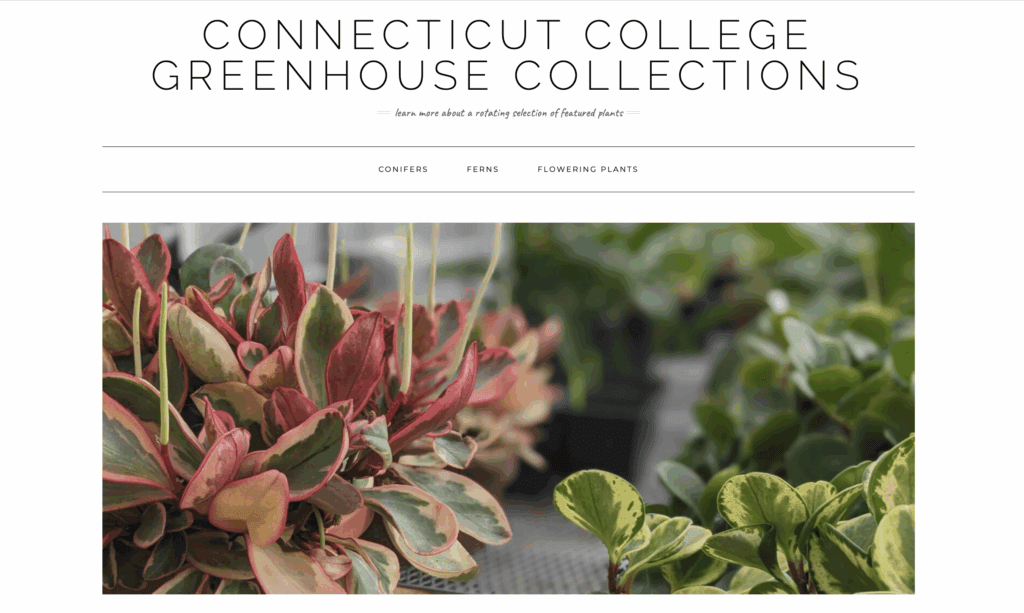
The Greenhouse teaching and research collection includes well over 400 plants. The public website begun by students this spring can serve as both a growing catalog of our unique collection, and an open educational resource for learning about plant specimens, as students in Professor Spicer’s courses add to it in future semesters.
Both of these course projects were built in WordPress and hosted in Connecticut College’s Domain of One’s Own system. Support for scaffolding the assignments, designing the project sites, and training students was provided by the Digital Scholarship & Curriculum Center.
